During this podcast, Deacon Keating will offer his insights on the mystery of this Easter.
Here a few of his comments:
God always is faithful to himself. He is always choosing life. He is always choosing creating. He’s always choosing a way around the obstacles that we put up to him so that he can be faithful to himself. So the greatest obstacle obviously is death and sin. And he’s always found a way around those two to keep finding us. And that’s why hope is such a great theme on Easter Sunday because there’s no one who can stop God from being God.
All the conversion stories of the history of Christianity, 2000 years of God finding the lost sheep, God going around the obstacles that we have put up to his own nature of being a creator who gives. And that’s our great hope. Not us, right? It has never been us. Oh, you’re a good man. Oh, you’re a good woman. Oh, you can do this. No. I am a disaster. I’m a mess. I’m weak. I am vulnerable and I need to stay in a stance of vulnerability so that God can actually go around the obstacles I’ve been throwing at him for decades and find me. Reach out to my hand like he did to Adam in the afterlife and take me out of death and keep me in creation and keep me in the cycle of giving and receiving. That’s divinity, creating and the reciprocity of giving and receiving.
And he wants us to get into that with him. That’s why he’s always reaching out to us. Easter Sunday is the greatest celebration of that hope. God will always be God. We cannot make him other than what he is. And what he is, is someone who finds us no matter what obstacles we put up.
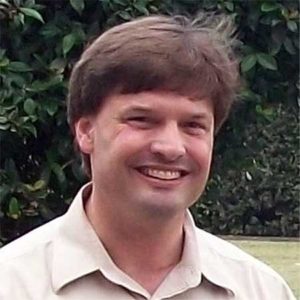
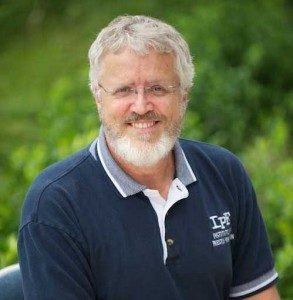
Deacon James Keating, Ph.D., the director of Theological Formation for the Institute for Priestly Formation, located at Creighton University, in Omaha.
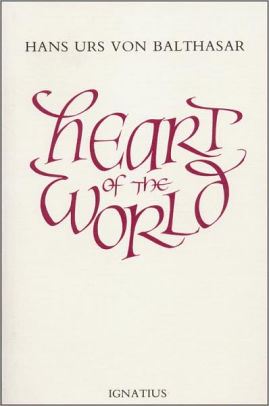
Join Dr. Anthony Lilles and Kris McGregor as they offer a type of “online retreat” based on the spiritual work Heart of the World written by Fr. Hans Urs von Balthasar.
In third “conference” talk, Dr. Lilles reflects upon “Jailhouse and Cocoon”
Here is the excerpt that is read in the conference:
YOU ARE IN PRISON and I am in prison. I know, Lord, that you are in your prison for my sake and that you remain in yours only because I remain in mine. Both of them belong together; both are one and the same dungeon. If you could succeed in freeing me from my confinement, you too would be free. The dividing wall between us would topple and we would – both enjoy the same freedom. I, too, could perhaps free you by freeing myself, and in this case as well we would both be freed. But that’s just it! This is precisely what you can’t do and what I myself can’t do.
I know your secret; you want to share my destiny. But I am deeply buried within myself and I cannot burst open the gates to this hell. You thought it would be easier for two, and you offered to help me. You buried yourself in my cave. But, because my solitude is lonely, yours also became lonely. And now we wait one for the other, separated by this wall. I well know that the fault lies with me, and not at all with you. You have done everything that was possible. you have suffered, made atonement in my place, paid for everything in advance, down to the last drop, But there is one th1ng you can’t do, and this is something I can’t do either. I should . . . but I cannot. I should want to, but I don’t. I wish I could want to but I don’t want to want to. How do things stand’ then? How can this be? I don’t understand it. They say you blotted out sin and made atonement for it. They say you effaced sin, not just covered it over, and that henceforth it no longer exists in the eyes of God. And yet sin is precisely this: that I do not want what God wants. And I can’t see how this opposition on my part could be broken. I can’t see how this prison wall which holds me captive could be pierced through.
Do you know what I mean, Lord? It isn’t easy to explain this to you. For I myself don’t know exactly how it occurs, how all of this fits together. When I reflect upon it, it’s like knotted briars and my soul gets trapped in them. My soul is like the young lamb that wandered off among the thorns. I’ll try to tell you how it happened.
Hans Urs von Balthasar, Heart of the World (San Francisco: Ignatius Press, 1979), 133-134.
Here is the link to the Jesus, You Take Over prayer that Dr. Lilles mentions in the conference.
Though having the “Heart of the World” mentioned in this “retreat” is not necessary, we would encourage you at some to purchase this outstanding spiritual classic.
A great Catholic theologian speaks from the heart about the Heart of Christ, in a profound and lyrical meditation on Our Lord’s love for his Bride the Church.
Avid readers of Hans Urs von Balthasar often describe Heart of the World as a “surprise”. The “pure serenity of a volcano under snow” readers usually find in Balthasar, as translator Erasmo Leiva puts it, gives way to “the poet-theologian” who dares to “bare his own heart”. The sult is what can only be described as lyrical, even intimate spiritual reflections.
“Heart of the World”, the translator continues, “deserves a place next to
the Imitation of Christ. Especially in the passages where Christ speaks to the soul, Father von Balthasar shows himself a worthy successor of
Thomas a Kempis. Both works combine an intense personal piety with
a precise awareness of the believer’s position as child and servant of Christ’s Church…. For Balthasar, as for Kempis and all genuine Chris tians, the saint is first and foremost the one who renders constant thanks for having been loved.”
Heart of the World is a profound and theologically rich reflection on the
Heart of God.
Anthony Lilles, S.T.D. is the St. Patrick’s Seminary & University in Menlo Park, CA. He has served the Church and assisted in the formation of clergy since 1994, and now previously served in the Archdiocese of Los Angeles as Academic Dean of St. John’s Seminary, associate professor of theology and Academic Advisor of Juan Diego House. The son of a California farmer, married with young adult children, he holds a BA in theology from the Franciscan University of Steubenville with both the ecclesiastical licentiate and doctorate in spiritual theology from the Pontifical University of Saint Thomas Aquinas in Rome (the Angelicum). He was a founding faculty member of Saint John Vianney Seminary in Denver where he also served as academic dean, department chair, director of liturgy and coordinator of spiritual formation for the permanent deacon program. He has recently published Hidden Mountain Secret Garden, Omaha: Discerning Hearts (2012)
Join Dr. Anthony Lilles and Kris McGregor as they offer a type of “online retreat” based on the spiritual work Heart of the World written by Fr. Hans Urs von Balthasar.
In part two of this second “conference” talk, Dr. Lilles reflects upon “The Coming of the Light”
Here is the excerpt that is read in the conference:
Do not take offense, you branches, at the deformity of your trunk. Do not scorn the powerlessness that strengthens you. For in me death is at work, but in you, life. You are sated, you have already become rich; without me you have attained to lordship. Were it only true lordship, then could I reign in you! But while you are strong, I am still weak; and at the same time as you make a show of your honors, I am despised. To this very hour I suffer hunger and thirst, nakedness and blows. I am the homeless one who slaves away at the work of his hands. I am the accused one who blesses, the persecuted who bears it patiently, the slandered consoler, the world’s refuse. Still today, as always, I am the draining dishwater in which you all wash. And just as you despise me, so you despise my disciples and emissaries, for in them also the same law of weakness is at work. And because all life has its origin in the impotence and even disgrace. I have appointed the last place for them, as if they were evildoers condemned to death. But just as I live from the power of God after being crucified in weakness, so too will they prove themselves to you to be alive in me with the power of God. For look: in them my life has begun to circulate and to bring them to ripeness as my firstfruits. Just as the strawberry plant sends out long shoots which soon form roots and finally produce a new plant, so too have I multi plied my inner center and established new centers in hearts sprung from mine. My children become fathers and new communities blossom from the blood of my Apostles’ hearts. For my grace is always fruitful, and my gift it is for you to pass my grace on. My treasure is to be found in prodigality, and only he possesses me who gives me away. For I am indeed the Word, and how can one possess a word other than by speaking it?
Hans Urs von Balthasar, Heart of the World (San Francisco: Ignatius Press, 1979), 82-83.
Though having the “Heart of the World” mentioned in this “retreat” is not necessary, we would encourage you at some to purchase this outstanding spiritual classic.
A great Catholic theologian speaks from the heart about the Heart of Christ, in a profound and lyrical meditation on Our Lord’s love for his Bride the Church.
Anthony Lilles, S.T.D. is the St. Patrick’s Seminary & University in Menlo Park, CA. He has served the Church and assisted in the formation of clergy since 1994, and now previously served in the Archdiocese of Los Angeles as Academic Dean of St. John’s Seminary, associate professor of theology and Academic Advisor of Juan Diego House. The son of a California farmer, married with young adult children, he holds a BA in theology from the Franciscan University of Steubenville with both the ecclesiastical licentiate and doctorate in spiritual theology from the Pontifical University of Saint Thomas Aquinas in Rome (the Angelicum). He was a founding faculty member of Saint John Vianney Seminary in Denver where he also served as academic dean, department chair, director of liturgy and coordinator of spiritual formation for the permanent deacon program. He has recently published Hidden Mountain Secret Garden, Omaha: Discerning Hearts (2012)
During this podcast, Deacon Keating will offer his insights on the mystery of this Good Friday.
Here a few of his comments:
Deacon James Keating:
John is the one who gives us that famous line. It is finished. It is finished. What is finished? This creation, creation is finished. Everything after the crucifixion, the resurrection, everything after that is creation, a sort of groaning as Paul says, to catch up to what Jesus has already done, that perfect man, that perfection of God. And again, perfection is not as we understand it perhaps mathematically with no errors or faults, but scripturally, perfection is what Jesus said it was, be perfect as your heavenly Father is perfect. And then he contextualized that within the sense of welcoming your enemies, welcoming the other, welcoming those who are not you. And of course, that’s what Jesus was literally doing on the cross. He was welcoming those who were the enemy, who were not him, in other words, were against him, and this is what perfection is for the Christian.
On the cross, Jesus was the perfect man because he was the man who was forgiven, welcoming of the enemy, welcoming of the one who was literally killing him, and still not calling down his angels to destroy them, but actually welcoming the one who is killing into his own heart. As scripture says, “God has the sun shine on the good and the evil”, and that’s what Jesus was doing from the cross. He was saying, “You’re still welcome in me even as you’re killing me because I am love itself.”
And so as we meditate on Good Friday and on the crucifixion, we’re also meditating on our own dignity as Christians. We have, again, through the Holy Spirit, we have that spirit of perfection in us, the spirit of forgiveness, the spirit of welcoming those who are not ourselves. In other words, to no longer live as extensions of our egos, but to literally be hospitable to the other, even the other who would hurt us through the process of forgiveness.
Obviously, great mysteries here that the Holy Spirit must tutor us in real life. We can always think about them and write about them and speak about them, but when it comes to living them, we really need the incredible combustible power of the Holy Spirit moving our will to actually welcome the enemy and forgive those who are hurting us. But it’s all there on the Cross. The perfect man, the forgiven man, the man who is in perfect harmony with God, all of those things Jesus is trying to gift us with as well.
Deacon James Keating, Ph.D., the director of Theological Formation for the Institute for Priestly Formation, located at Creighton University, in Omaha.
During this podcast, Deacon Keating will offer his insights on the mystery of this Holy Thursday.
Here a few of his comments:
Deacon James Keating:
So the fullness of Holy orders is there and we celebrate that because obviously without Holy orders, there’s no power of salvation that’s unleashed in the sacramental economy and we would just be void or it would be devoid of his presence and his power through the things of the earth. And that’s the beauty of the sacraments. We get both the presence and the power of Jesus through the things of the earth. That’s what makes the sacrament so accessible. The human body of the priest. Oil, water, wine, bread. So simple, so humble, so accessible. Again, the meditation of God’s great love for us that he is generously available through the things of the earth.
And that’s what makes our sacramental system so mindbogglingly joyful is that when we really are in a sacramental imagination as Catholics, our joy deepens because we realize, Oh my gosh, we are so loved. It’s not like he said, “You have to go up this mountain and find me. I’ll come to you as bread and I’ll come to you in oil and I’ll come to you. My power will come to you through the waving of a hand in a blessing. I will do all that for you and you just have to show up at the corner of Maple and 50th street. Your parish church and I’ll be there through these things of the earth.” It’s very, very humbling and powerfully beautiful to think about how close he wants to be with us and how accessible he is to us through the sacraments. And that’s why so many more people are mourning these days in the midst of the Coronavirus because even that is unattainable. The most ordinary accessible elements of the earth where Jesus wants to give us his power and his presence is unaccessible. Inaccessible these days because of the sorrow that we’re in.
Further in the conversation:
We always say, try to live in the present moment. But that’s a real grace to live in the present moment and to live in the present moment as grace is something we need to be asking for now. It may not be easily attained or easily appropriated, but we will miss something very vital if we’re not going deep and we’re just going towards fantasy to the future and daydream about when this will be over. And even emotionally anticipating it. Thinking that I’m happy now because I’m thinking this won’t last forever. And meanwhile, a lot of goods are present where you should be going deep into the relationships of the home. Even into the relationship somewhat of suffering. But not to utilize suffering, but to just realize that even in suffering there is a presence emerging from him because obviously he’s dwelling within us. And so we never utilize suffering, but within suffering itself, if we can pay attention to it, we may linger there long enough to allow his presence to come.
Whether it’s a suffering of the end of our daily routine, which we’re all suffering now, or the horrific suffering of sickness itself, which is so sacred that only the sick should really talk about it. But we have testimony from the saints that in the midst of sickness sometimes they sense his presence emerging as they pay attention to their own limit and finitude and weakness and he comes from within to minister to them. So the whole theme of are you living in the present moment is truly a contemplative gift that perhaps God is giving all of us now, and we don’t want to miss the hour of our visitation.
Deacon James Keating, Ph.D., the director of Theological Formation for the Institute for Priestly Formation, located at Creighton University, in Omaha.
Join Dr. Anthony Lilles and Kris McGregor as they offer a type of “online retreat” based on the spiritual work Heart of the World written by Fr. Hans Urs von Balthasar.
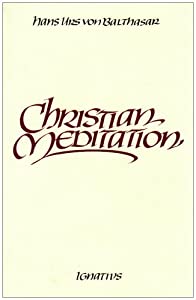
In this first “conference” talk, Dr. Lilles discusses, as a primer for the retreat, the teachings of Fr. von Balthasar found in Christian Mediation.
Dr. Lilles will talk about the disposition for entering into prayer during this particular time. He will discuss the nature of “spiritual exercises” as expressed by St. Ignatius of Loyola
Dr. Lilles will offer solid direction about entering into mental prayer during this “retreat” time and how to experience the encounter with the Word.
He will also offer suggestions for further reading for this grace-filled time and how to create a space for prayer given the circumstances you mind find yourself.
He would especially encourage the listener to read The Gospel of John 13 – 19 during this time.
Though having the books mentioned in this “retreat” are not necessary, we would encourage you at some to purchase these outstanding spiritual classics.
You find the paperback book and ebook discussed in this first conference here
From the book description:
When it comes to meditation the decisive question, according to Hans Urs von Balthasar, is whether God has spoken or “whether the Absolute remains the Silence beyond all words”. Christianity claims God has spoken, and spoken fully, in his Son, the Word made flesh. While God remains mysterious, he is not utterly unknown or unknowable.
Von Balthasar insists through Christian meditation we enter with mind and heart into God’s self-disclosure. In Jesus, God reveals his own inner depths to us. At the same time, because Jesus is God-made-man, he also reveals our inner depths to ourselves.
Christian Meditation is at once a book about what meditation is, in light of God’s revelation, and a book that assists believers to meditate. In a treatment that is both fresh and profound, von Balthasar describes the central elements of all Christian meditation, provides a guide for meditation and then points the way to the union that prayer achieves in the footsteps of Mary, within the Church and in and for the world.
A great Catholic theologian speaks from the heart about the Heart of Christ, in a profound and lyrical meditation on Our Lord’s love for his Bride the Church.
Avid readers of Hans Urs von Balthasar often describe Heart of the World as a “surprise”. The “pure serenity of a volcano under snow” readers usually find in Balthasar, as translator Erasmo Leiva puts it, gives way to “the poet-theologian” who dares to “bare his own heart”. The sult is what can only be described as lyrical, even intimate spiritual reflections.
“Heart of the World”, the translator continues, “deserves a place next to
the Imitation of Christ. Especially in the passages where Christ speaks to the soul, Father von Balthasar shows himself a worthy successor of
Thomas a Kempis. Both works combine an intense personal piety with
a precise awareness of the believer’s position as child and servant of Christ’s Church…. For Balthasar, as for Kempis and all genuine Chris tians, the saint is first and foremost the one who renders constant thanks for having been loved.”
Heart of the World is a profound and theologically rich reflection on the
Heart of God.
Anthony Lilles, S.T.D. is the St. Patrick’s Seminary & University in Menlo Park, CA. He has served the Church and assisted in the formation of clergy since 1994, and now previously served in the Archdiocese of Los Angeles as Academic Dean of St. John’s Seminary, associate professor of theology and Academic Advisor of Juan Diego House. The son of a California farmer, married with young adult children, he holds a BA in theology from the Franciscan University of Steubenville with both the ecclesiastical licentiate and doctorate in spiritual theology from the Pontifical University of Saint Thomas Aquinas in Rome (the Angelicum). He was a founding faculty member of Saint John Vianney Seminary in Denver where he also served as academic dean, department chair, director of liturgy and coordinator of spiritual formation for the permanent deacon program. He has recently published Hidden Mountain Secret Garden, Omaha: Discerning Hearts (2012)
During this podcast, Deacon Keating will offer his insights on “the mystery of this present moment.”
Here a few of his comments:
Deacon Keating:
So, the wisdom of the Saints comes back to us again and again. Of course, in good times we never listened to the saints because we got this. And in bad times, we’re suffering so much, that a lot of times they can’t get their wisdom through to us because of our pain. So, it’s quite paradoxical. But the wisdom of the Saints is this, that throughout our life, no matter what we’re experiencing in suffering or enjoying, we should always be sloughing off the excess of our days, any idols that we are drawing artificial consolation from. We should be seeking Holy communion, no matter whether we’re in good times or bad times.
So, when bad times come or when good times come, everything is calculated toward reality and peace because we have been suffering the coming of Holy communion throughout our entire life. So, when people don’t have this Holy communion during bad times like we’re in right now, we can panic and we can start grasping at straws, and thinking that everything is over and ending. Anxiety then becomes our normal state. So, again, the saints would counsel us when this horrible virus passes, if we could just remember not to go back to being normal Americans, but to go back to Him and get our equilibrium set, and the substance of our interior life set. So that when the next reminder that everything on this planet is not forever, when that next reminder comes, we’ll have less panic and more peace because we will have been living for a while then in Holy communion.
Further in the conversation:
The reason there’s so much fear is that we are acknowledging that death is real. Again, most of our popular culture is a mask keeping us from ever thinking about death. Now there are all these masks that have dropped, death comes to the fore and it’s not something we want to rebel in or say, “Let’s look at this and some type of McCobb way.” But we’ve known as believers, that death has always been the enemy. Now we see it. We see the enemy, we’ve been afraid of the enemy.
Again, we’ve been afraid of the enemy because our Holy communion isn’t stronger enough, with our Holy friend, Jesus Christ. The deeper that friendship grows with him, the more we can confront death in peace. Without panic, without fear. Of course, there’ll be sadness, it will be mourning. But the sadness in the mourning is over the good things of life, the panic and the fear is over that which we have created in ourselves. Which is a habitual stance of isolation from God. That’s what he’s gently trying to say to us. This death has always been here. Your limit and your finitude have always been part of your life. Stop masking it and let’s look at real life. It’s okay to look at it, with me. That’s why I came so that you would not be alone when you look at it, that’s what we call salvation.
You’re looking at it from the stance of communion with him. That’s how the Saints die in joy and in peace. So push against the fear and choose a career. That would be the theme of this imposed retreat, I would say.
Deacon James Keating, Ph.D., the director of Theological Formation for the Institute for Priestly Formation, located at Creighton University, in Omaha.
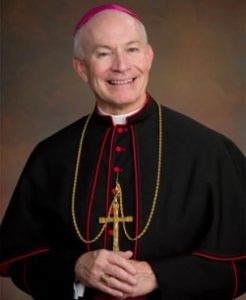
Discerning Hearts special with Archbishop George Lucas of the Archdiocese of Omaha.
In this episode, Archbishop Lucas discusses the challenges we all are facing in the light of the global pandemic caused by the novel coronavirus. He reminds us that God is not mad with us, but loves us all more deeply than we could ever know and is pouring out extraordinary grace to individuals as well as to the world. We want to be sure to open our hearts in order to receive that grace and mercy. He would also ask to us remember that the mass continues to be celebrated by parish priests on behalf of their people and to be open to that grace particularly during this extraordinary Holy Week. We need to trust in God and to show us the way forward. We should also meet the challenge to notice our neighbors in need. He would encourage all of us to enter into the mystery of Holy Week by reading the scriptures of the mass for the day, to seek out live streams of the liturgy, and to take to be with the Lord during this sacred time.
Join Deacon Omar F. A. Gutierrez and Kris McGregor as they discuss the events of the global Coronavirus pandemic of 2020. They discuss how this affects the family, the value of life, and the lessons it brings. We discuss the liturgical life of the Church during Holy Week and how we might be able to enter into this sacred period in these challenging days.
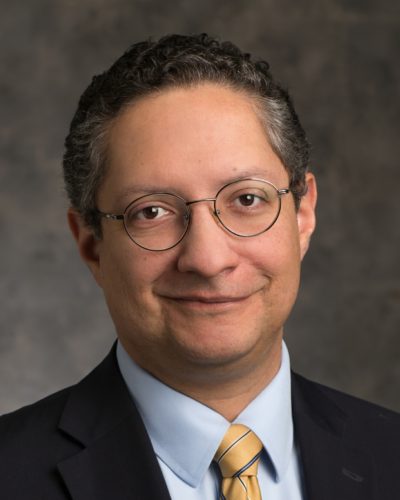
Deacon Omar Gutiérrez is the President and co-Founder of the Evangelium Institute as well as the Director of the Society for the Propagation of the Faith in the Archdiocese of Omaha. An alumnus of Franciscan University, the Pontifical University of St. Thomas Aquinas in Rome and the University of Dallas, he has an MA in Theology and has been published in a number of print and online magazines and newspapers including the National Catholic Register and The Catholic Voice. His book, The Urging of Christ’s Love: The Saints and the Social Teaching of the Catholic Church was published in 2013, and he has a program on Catholic Social Teaching through DiscerningHearts.com which is aired on the Spirit Catholic Radio Network.
Episode 7 -The Way of Mystery: The Eucharist and Moral Living– The Liturgy of the Word part 1 Christ entering us through language. The difference in our attitude of being an “audience” and being in an attitude of prayer. How the Word sets us free.
Deacon James Keating, Ph.D., the director of Theological Formation for the Institute for Priestly Formation, located at Creighton University, in Omaha.
The Vatican II documents remind us that the spiritual journey is not made in a vacuum, that God has chosen to save us, not individually, but as The People of God. The Eucharist must help Christians to make their choices by discerning out of Christ’s paschal mystery. For this process to take place, however, Christians must first understand how the Eucharist puts them in touch with Christ’s passion, death, and resurrection, and what concrete implications being in touch with this mystery has for their daily lives.