Mystical Experience and Consoling Prayer – The Way of Mystery with Deacon James Keating
Deacon James Keating explains how God draws the heart toward himself through ordinary prayer and through growth out of serious sin. He describes “consoling prayer,” the simple joy and peace one begins to notice when turning to God—often after the hard early work of conversion, repentance, and regular prayer. Over time, prayer becomes something we desire rather than an obligation, and affection for God gently replaces past attachments to sin. God can unexpectedly visit us during ordinary moments of the day, stirring love for him outside of set prayer times. These moments are like spontaneous interior invitations that deepen closeness with Christ.
He also speaks of union through the sacraments—especially the Eucharist—where Christ is truly present even when affection is absent. Acting according to a well-formed conscience is itself another real union with Christ, because choosing the good unites us to the One who is Truth, even when doing so brings difficulty or misunderstanding in the culture. Ongoing purification, participation in parish life, and concrete practices such as confession, spiritual direction, works of mercy, and friendships rooted in Christ gradually reorder the heart. Conversion is a continual turning toward Christ in the Eucharist, letting him heal attachments to sin and make us new.
Discerning Hearts Reflection Questions
When have I experienced prayer as something I genuinely look forward to rather than a duty?
In what areas of my life do I still seek comfort from old habits instead of turning to Christ?
How open am I to unexpected moments of prayer during my ordinary day?
What keeps me from approaching the Eucharist with a heart ready for inner change?
When choosing the good becomes costly, how do I remain faithful to conscience?
Which practices in my parish are truly helping my heart turn toward Christ?
What specific attachment to sin do I need to surrender to the Lord right now?
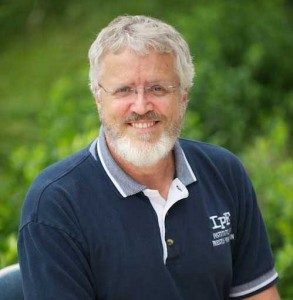
Deacon James Keating, Ph.D., is a professor of Spiritual Theology and serves as a spiritual director at Kenrick Glennon Seminary in St. Louis, MO.
The 2nd Sunday of Advent – A Call to Wake Up, Repent, and Enter the Light of JesusBuilding a Kingdom of Love with Msgr. John Esseff
In this Advent reflection, Msgr. John Esseff turns to the figure of John the Baptist and the call to repentance that prepares the way for the Lord. He explains that John stands at the culmination of Old Testament prophecy, announcing the arrival of the Messiah and calling all people to conversion. Yet Jesus teaches that the least in the kingdom is greater than John, because Christians carry Christ within them. This means the true tragedy is not simply breaking commandments but failing to live as Christ in the world.
Msgr. Esseff then guides listeners through examples of interior patterns that separate the soul from union with Jesus. He speaks about judgmental attitudes, envy, lust, unforgiveness, gluttony, and other deep tendencies that distort the heart. Each one acts like a hidden disease that wounds the life of Christ within the person. Advent becomes a time to uncover these wounds through honest examination and to bring them to the Lord for healing.
He urges listeners to call upon the Holy Spirit, who reveals the core wound with gentleness, not accusation. The Spirit convicts with light and love, while the enemy accuses and discourages. Confession is offered as a powerful path to healing, where the cross penetrates the soul and restores union with Christ.
Msgr. Esseff encourages priests to open the confessional during Advent and calls all Christians to stop judging one another and instead direct loved ones to the Holy Spirit, who alone can reveal the truth of the heart. Advent is presented as a privileged time to awaken, repent, and prepare for the coming of the Lord, who desires to bring healing, renewal, and unity to every soul.
Discerning Hearts Reflection Questions
What interior pattern or tendency separates me most from Christ right now?
When I examine my heart, do I hear the accusing voice or the gentle clarity of the Holy Spirit?
Where have I allowed judgment, envy, or resentment to shape my thoughts or relationships?
What wound or habit is the Holy Spirit inviting me to bring to confession this Advent?
How can I prepare my heart to welcome Christ more deeply during this season?
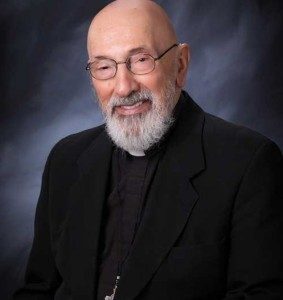
Msgr. John A. Esseff is a Roman Catholic priest in the Diocese of Scranton. Msgr. Esseff served as a retreat director and confessor to St. Teresa of Calcutta. He continues to offer direction and retreats for the sisters of the Missionaries of Charity around the world. Msgr. Esseff encountered St. Padre Pio, who would become a spiritual father to him. He has lived in areas around the world, serving in the Pontifical missions, a Catholic organization established by Pope St. John Paul II to bring the Good News to the world, especially to the poor. Msgr. Esseff assisted the founders of the Institute for Priestly Formation and continues to serve as a spiritual director for the Institute. He continues to serve as a retreat leader and director to bishops, priests and sisters and seminarians, and other religious leaders around the world.
The Internal World and External Presence of God – The Way of Mystery with Deacon James Keating
Deacon James Keating explains that experiencing God’s love begins with grace. God reaches the heart through intellect and affection, but many miss these moments because they are distracted or constantly driven by ego. Silence allows us to perceive God’s presence—whether through beauty, acts of kindness, or gratitude. Asking God directly for the gift of knowing His love, being attentive to the movements of the heart, and recognizing that this union often begins in moments of consoling prayer. Such prayer is not confined to formal worship; it can arise unexpectedly, even outside the church. The Eucharist prepares us to make a space for God rather than forcing His action. Faith—not sensation—is at the core of sacramental life, and remaining faithful in the absence of feelings still brings genuine closeness to God.
Authentic spiritual union deepens when conscience is followed, even when it causes suffering. Acting on truth at personal cost draws us into Christ’s own obedience and sacrifice. This suffering is not a sign of abandonment but a participation in the Paschal mystery, where union with Christ matters more than comfort. Saints such as St. Bernadette, St. Edith Stein, and St. Maximilian Kolbe willingly faced hardship because intimacy with Christ outweighed fear. Daily moral decisions—large or small—are sustained not by human strength but by Christ’s presence received through prayer and the Eucharist. In these ways—consoling prayer, sacramental life, fidelity to conscience, and union in suffering—the soul begins to taste heaven on earth.
Discerning Hearts Reflection Questions
When was the last time I slowed down to notice God reaching out to me through beauty, kindness, or gratitude?
How do I make space for silence in my daily life so that God can communicate His presence to my heart?
Do I pray not only to believe in God’s love, but also to truly know and experience it?
How do I approach the Eucharist—as a demand for spiritual sensation or as an act of faith and readiness?
Have I noticed moments of consolation in prayer outside formal worship, and how did I respond to them?
When my conscience reveals a difficult truth, do I trust Christ enough to follow it even when suffering is involved?
In what areas of life do I cling to comfort or ego instead of surrendering to God’s invitation to deeper union?
How does my experience of sacramental life shape my willingness to put others first in small, everyday sacrifices?
What fears keep me from seeking Christ’s will, and how can I bring those fears into prayer?
Where have I seen God sustain me through a painful decision, and how did that deepen my relationship with Him?
Deacon James Keating, Ph.D., is a professor of Spiritual Theology and serves as a spiritual director at Kenrick Glennon Seminary in St. Louis, MO.
The 1st Sunday of Advent – A Call to Wake Up, Repent, and Enter the Light of JesusBuilding a Kingdom of Love with Msgr. John Esseff
On the First Sunday of Advent, Msgr. Esseff shares two deeply moving testimonies that reveal the power of love, faith, and the kingship of Christ. The first story follows a Christian couple who defied medical advice to abort their “defective” child, trusting instead in God’s providence. Their faith was rewarded with the birth of a healthy baby who grew into a successful firefighter.
In this first Sunday of Advent reflection, Msgr. John Esseff invites listeners into the season with a call to spiritual wakefulness. Drawing from the Gospel of Matthew, he explains Jesus’ warning that some will be united with him at his coming while others will be left behind. The key difference is union with Christ, a union formed through baptism, nourished by grace, and renewed through repentance.
Msgr. Esseff speaks about the early Church, the outpouring of the Holy Spirit, and the ongoing need for every Christian to “put on the Lord Jesus Christ.” He warns that sin separates the soul from Christ and dims the light God desires to radiate through us. Advent is presented as a time to return to that light, confront the shadows in our lives, and seek healing through confession, prayer, and intentional spiritual discipline.
The episode also explores Advent’s connection to peace. Drawing from Isaiah, Msgr. Esseff prays for a world where nations turn weapons into instruments of cultivation, and where each person commits to the peace Christ brings. He shares personal experiences of confession, transformation, and encounters with families seeking deeper union with God.
As the episode closes, he encourages listeners to begin an Advent journal, undertake a sincere spiritual inventory, and allow the Holy Spirit to reveal areas of darkness that need grace. For Msgr. Esseff, Advent is the doorway to a renewed life in Christ, a season where hearts awaken, grace deepens, and the soul prepares to welcome the light of Christmas.
Discerning Hearts Reflection Questions
What area of my life most needs the light of Christ as Advent begins?
Where have I allowed habits or attitudes to separate me from Jesus?
What specific action can I take this week to grow in holiness and peace?
How is God calling me to make room for deeper union with him this Advent?
What step toward reconciliation or virtue is the Holy Spirit prompting in my heart?
Gospel Matthew 27:37-44
Jesus said to his disciples:
“As it was in the days of Noah,
so it will be at the coming of the Son of Man.
In those days before the flood,
they were eating and drinking,
marrying and giving in marriage,
up to the day that Noah entered the ark.
They did not know until the flood came and carried them all away.
So will it be also at the coming of the Son of Man.
Two men will be out in the field;
one will be taken, and one will be left.
Two women will be grinding at the mill;
one will be taken, and one will be left.
Therefore, stay awake!
For you do not know on which day your Lord will come.
Be sure of this: if the master of the house
had known the hour of night when the thief was coming,
he would have stayed awake
and not let his house be broken into.
So too, you also must be prepared,
for at an hour you do not expect, the Son of Man will come.”
Msgr. John A. Esseff is a Roman Catholic priest in the Diocese of Scranton. Msgr. Esseff served as a retreat director and confessor to St. Teresa of Calcutta. He continues to offer direction and retreats for the sisters of the Missionaries of Charity around the world. Msgr. Esseff encountered St. Padre Pio, who would become a spiritual father to him. He has lived in areas around the world, serving in the Pontifical missions, a Catholic organization established by Pope St. John Paul II to bring the Good News to the world, especially to the poor. Msgr. Esseff assisted the founders of the Institute for Priestly Formation and continues to serve as a spiritual director for the Institute. He continues to serve as a retreat leader and director to bishops, priests and sisters and seminarians, and other religious leaders around the world.
The Unitive Way – The Way of Mystery with Deacon James Keating
Deacon Keating explains how spiritual growth develops through three stages. Catholic moral teaching is not an unreachable ideal. Drawing on Pope John Paul II’s Veritatis Splendor, he says real transformation is possible because the power of Christ’s resurrection works within us. The purgative stage involves turning away from attachment to sin, often a difficult shift. The illuminative stage brings a growing attraction to virtue and inner peace. Keating uses Thomas Merton’s experience to show how grace reaches us in ordinary life—on a morning commute or after attending Mass.
The unitive stage goes further: one begins not only to love virtue but to love Christ Himself, the source of all virtue. This is like tasting heaven on earth and reflects Scripture’s nuptial imagery—God desires a relationship of love with His people. The sacramental life of the Church nourishes this union. Keating invites listeners to become attentive to God’s quiet arrivals in everyday moments: a sudden clarity, peace, or prompting of conscience. When these come, remain in that presence as long as it naturally lasts, letting grace deepen love for God and uncover anything that blocks receiving Him more fully.
Discerning Hearts Reflection Questions
In what areas of my life do I still cling to sin, and how might I open these places to Christ’s healing power?
When have I experienced a new affection for virtue, and how did I sense grace at work in that moment?
Do I live as though Jesus is truly alive within me, influencing my choices and desires?
How does the sacramental life—especially the Eucharist—deepen my relationship with Christ rather than simply improve my behavior?
Where in ordinary life might God be quietly visiting me, and how can I become more attentive to His subtle presence?
What attitudes or habits might be blocking me from receiving His love more fully, and how can I bring them to confession?
How do I understand the unitive way as a relationship of love rather than an achievement of spiritual “success”?
When I sense God’s presence, do I linger with Him as long as prudence allows, or do I rush back to distraction?
Deacon James Keating, Ph.D., is a professor of Spiritual Theology and serves as a spiritual director at Kenrick Glennon Seminary in St. Louis, MO.
Christ the King and the Victory of Jesus – Building a Kingdom of Love with Msgr. John Esseff
In this episode of Building a Kingdom of Love, Msgr. John Esseff reflects on the Solemnity of Christ the King. He turns to the Gospel of Luke to show how Jesus reigns from the cross, victorious in love. Msgr. Esseff explains that Christ conquers sin through his mercy, conquers the devil through his authority, and conquers death through the glory of his Resurrection. He shares personal experiences from mission work around the world and encourages listeners to trust in the power of Jesus rather than fear evil. With Kris McGregor, he discusses how Christ brings divine order to creation and how each baptized person has a distinct mission within the Body of Christ. The episode closes with hope in the eternal life promised to all who live in Christ.
Discerning Hearts Reflection Questions
Where do I need to invite Christ to bring his mercy into my life right now?
What fears about evil or darkness do I need to surrender to the authority of Jesus?
How is Christ asking me to participate in the life and mission of the Church today?
How does the kingship of Christ shape the way I view suffering, death, and eternal life?
What role has God entrusted to me within the Body of Christ at this moment of my life?
Msgr. John A. Esseff is a Roman Catholic priest in the Diocese of Scranton. Msgr. Esseff served as a retreat director and confessor to St. Teresa of Calcutta. He continues to offer direction and retreats for the sisters of the Missionaries of Charity around the world. Msgr. Esseff encountered St. Padre Pio, who would become a spiritual father to him. He has lived in areas around the world, serving in the Pontifical missions, a Catholic organization established by Pope St. John Paul II to bring the Good News to the world, especially to the poor. Msgr. Esseff assisted the founders of the Institute for Priestly Formation and continues to serve as a spiritual director for the Institute. He continues to serve as a retreat leader and director to bishops, priests and sisters and seminarians, and other religious leaders around the world.
Transformation – The Way of Mystery with Deacon James Keating
Deacon Keating and Kris McGregor discuss how scandals within the Church, particularly clergy abuse, have damaged trust but do not negate the truth that Christ continues to teach through the Church’s magisterium. Deacon Keating distinguishes between the unchanging fidelity of Christ’s promise to guide the Church in matters of doctrine and the personal failures of individual bishops and priests. Some people use these failures as a pretext to disregard Church teaching and remain entrenched in their own patterns of sin. It frames this dynamic as a moment when confusion and resentment can open the door to deeper spiritual distortion, leading people to disconnect from the very spiritual authority meant to help them heal.
The Eucharist is the privileged place where Christ reshapes the mind and heart. Mass—especially the silence after receiving Communion—becomes a space to bring doubts, disagreements, and personal wounds before Christ, allowing Him to purify motivations and lead one into clearer moral understanding. Even those in grave sin, who cannot receive sacramental Communion, still receive graces simply by remaining present at Mass, praying honestly, and remaining within the community rather than isolating themselves. Christ always offers Himself, always calls people toward conversion, and that authentic love sometimes includes hearing difficult truths about one’s life.
Discerning Hearts Reflection Questions
How do I respond interiorly when I witness failures in Church leadership, and do those reactions draw me closer to Christ or farther from Him?
In what ways might I use the sins of others—especially clergy—as a shield to avoid confronting my own need for conversion?
Do I bring my doubts or disagreements with Church teaching honestly before Christ in prayer, especially after receiving or attending the Eucharist?
What self-interests, fears, or wounds might influence my resistance to particular moral teachings?
How consistently do I remain within the worshiping community even when I feel unworthy, embarrassed, or spiritually conflicted?
When I refrain from Communion because of grave sin, do I still approach Mass as a place where Christ seeks to heal and guide me?
Do I listen attentively to preaching—especially difficult preaching—as a possible act of Christ’s love for my soul?
How aware am I of the real impact my freely chosen actions have on my relationship with Jesus and others?
What areas of my life need deeper repentance before I can authentically celebrate Communion with Christ?
How might I allow Christ to purify my motives so that my desire for truth becomes stronger than my attachment to comfort or personal preference?
Deacon James Keating, Ph.D., is a professor of Spiritual Theology and serves as a spiritual director at Kenrick Glennon Seminary in St. Louis, MO.
Trusting Jesus in an Age of Fear – Building a Kingdom of Love with Msgr. John Esseff
Msgr. John Esseff reflects on widespread anxieties about the end of the world by drawing from Malachi, the Gospel of Luke, and the lived suffering of Christians across the globe. Scripture speaks plainly about upheaval, persecution, natural disasters, and global conflict, yet Christ assures His followers that this world is not the final destination. Those who face violence or loss for Christ bear witness to a life that cannot be destroyed, because their destiny is anchored in the Resurrection. He recounts examples from history and from contemporary persecution to illustrate that the death of the body is not the death of one’s true life in God.
In the second part of the discussion, he highlights St. Paul’s teaching to the Thessalonians: the proper way to prepare for the world’s end is not through predictions or fear but through faithful, ordinary daily work. Just as Jesus lived quietly in Nazareth for most of His earthly life, and Paul labored as a tentmaker, Christians are called to fulfill their daily duties with integrity. The passing nature of earthly possessions, status, and comfort becomes clear in the face of mortality, and the only lasting tragedy is to miss the path to holiness. Perseverance in one’s vocation—united to Christ’s suffering, death, and rising—is the steady way to live in readiness for whatever comes, whether global upheaval or the moment of personal death.
Discerning Hearts Reflection Questions
How does remembering that this world will pass change the way I approach suffering, conflict, or fear in my life?
In what ways am I living as though this world is my final home rather than preparing my heart for eternal life?
How do the stories of persecuted Christians around the world invite me to examine my own witness to Christ?
What daily responsibilities or ordinary tasks might God be calling me to carry out with greater faithfulness and love?
Where am I tempted to seek security in possessions or status instead of trusting in Christ’s risen life?
How does the promise that “not a hair of your head will be destroyed” deepen my confidence in God’s care?
What fears about the future or the “end times” do I need to bring honestly to prayer?
How might God be inviting me to persevere more patiently through trials or uncertainty?
When confronted with sudden loss, tragedy, or global disasters, how can I root my response in Christ’s victory over death?
What concrete steps can I take this week to grow in holiness and live more fully “with, in, and through” Jesus?
Msgr. John A. Esseff is a Roman Catholic priest in the Diocese of Scranton. Msgr. Esseff served as a retreat director and confessor to St. Teresa of Calcutta. He continues to offer direction and retreats for the sisters of the Missionaries of Charity around the world. Msgr. Esseff encountered St. Padre Pio, who would become a spiritual father to him. He has lived in areas around the world, serving in the Pontifical missions, a Catholic organization established by Pope St. John Paul II to bring the Good News to the world, especially to the poor. Msgr. Esseff assisted the founders of the Institute for Priestly Formation and continues to serve as a spiritual director for the Institute. He continues to serve as a retreat leader and director to bishops, priests and sisters and seminarians, and other religious leaders around the world.
St. Albert the Great – The Doctors of the Church: The Charism of Wisdom with Dr. Matthew Bunson
Born: 1193, Lauingen, Germany
Died: November 15, 1280, Cologne, Germany
Education: University of Padua
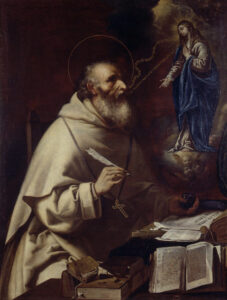
Dr. Matthew Bunson and Kris McGregor take a look at the life and legacy of St. Albert the Great, a Dominican theologian, philosopher, scientist, and mentor to St. Thomas Aquinas. Known for harmonizing faith, reason, and science, Albert saw the study of nature as a way to deepen understanding of God. He was instrumental in reintroducing Aristotle’s philosophy to the West and demonstrated how pagan thought could be reconciled with Christian theology; the compatibility of reason and faith. His vast contributions to natural sciences, including botany, zoology, and mineralogy, reflected his belief that studying creation reveals the Creator’s glory.
Albert’s life was marked by both intellectual brilliance and profound spiritual devotion, rooted in a mystical encounter with the Blessed Virgin Mary. Renouncing his noble background to join the Dominicans, he embraced poverty and the pursuit of knowledge in service to God. His influence shaped scholasticism, the integration of philosophy into theological studies, and the education of future Church leaders like Aquinas. A trusted advisor to popes and a mediator within the Church, Albert’s legacy is one of wisdom, joy, and the unyielding pursuit of truth, making him a timeless model of harmony between faith and reason.
Discerning Hearts Reflection Questions
How can you apply St. Albert’s example of harmonizing faith and reason in your own pursuit of knowledge and daily life?
What aspects of your life might you need to surrender, as Albert did, to follow God’s will more fully?
How do you cultivate a sense of wonder and gratitude for God’s presence in the natural world around you?
How does studying philosophy or other intellectual disciplines deepen your understanding and practice of the Catholic faith?
Who has played a role in mentoring your spiritual growth, and how can you mentor others in their journey of faith?
In what ways can you strengthen your prayer life to ensure that your intellectual pursuits remain rooted in your relationship with God?
How can Albert’s approach to integrating science with faith inspire you to share the Gospel in modern contexts?
How can you reflect the joy and enthusiasm of St. Albert in your efforts to share and live out the truths of the Catholic faith?
“One of the great masters of medieval theology is St Albert the Great.
The title “Great”, (Magnus), with which he has passed into history indicates the vastness and depth of his teaching, which he combined with holiness of life. However, his contemporaries did not hesitate to attribute to him titles of excellence even then. One of his disciples, Ulric of Strasbourg, called him the “wonder and miracle of our epoch”.
He was born in Germany at the beginning of the 13th century. When he was still young he went to Italy, to Padua, the seat of one of the most famous medieval universities. He devoted himself to the study of the so-called “liberal arts”: grammar, rhetoric, dialectics, arithmetic, geometry, astronomy and music, that is, to culture in general, demonstrating that characteristic interest in the natural sciences which was soon to become the favourite field for his specialization. During his stay in Padua he attended the Church of the Dominicans, whom he then joined with the profession of the religious vows. Hagiographic sources suggest that Albert came to this decision gradually. His intense relationship with God, the Dominican Friars’ example of holiness, hearing the sermons of Blessed Jordan of Saxony, St Dominic’s successor at the Master General of the Order of Preachers, were the decisive factors that helped him to overcome every doubt and even to surmount his family’s resistence. God often speaks to us in the years of our youth and points out to us the project of our life. As it was for Albert, so also for all of us, personal prayer, nourished by the Lord’s word, frequent reception of the Sacraments and the spiritual guidance of enlightened people are the means to discover and follow God’s voice. He received the religious habit from Bl. Jordan of Saxony.
After his ordination to the priesthood, his superiors sent him to teach at various theological study centres annexed to the convents of the Dominican Fathers. His brilliant intellectual qualities enabled him to perfect his theological studies at the most famous university in that period, the University of Paris. From that time on St Albert began his extraordinary activity as a writer that he was to pursue throughout his life.
Prestigious tasks were assigned to him. In 1248 he was charged with opening a theological studium at Cologne, one of the most important regional capitals of Germany, where he lived at different times and which became his adopted city. He brought with him from Paris an exceptional student, Thomas Aquinas. The sole merit of having been St Thomas’ teacher would suffice to elicit profound admiration for St Albert. A relationship of mutual esteem and friendship developed between these two great theologians, human attitudes that were very helpful in the development of this branch of knowlege. In 1254, Albert was elected Provincial of the Dominican Fathers’ “Provincia Teutoniae” Teutonic Province which included communities scattered over a vast territory in Central and Northern Europe.
He distinguished himself for the zeal with which he exercised this ministry, visiting the communities and constantly recalling his confreres to fidelity, to the teaching and example of St Dominic.
His gifts did not escape the attention of the Pope of that time, Alexander iv, who wanted Albert with him for a certain time at Anagni where the Popes went frequently in Rome itself and at Viterbo, in order to avail himself of Albert’s theological advice. The same Supreme Pontiff appointed Albert Bishop of Regensburg, a large and celebrated diocese, but which was going through a difficult period. From 1260 to 1262, Albert exercised this ministry with unflagging dedication, succeeding in restoring peace and harmony to the city, in reorganizing parishes and convents and in giving a new impetus to charitable activities.
In the year 1263-1264, Albert preached in Germany and in Bohemia, at the request of Pope Urban iv. He later returned to Cologne and took up his role as lecturer, scholar and writer. As a man of prayer, science and charity, his authoritative intervention in various events of the Church and of the society of the time were acclaimed: above all, he was a man of reconciliation and peace in Cologne, where the Archbishop had run seriously foul of the city’s institutions; he did his utmost during the Second Council of Lyons, in 1274, summoned by Pope Gregory X, to encourage union between the Latin and Greek Churches after the separation of the great schism with the East in 1054. He also explained the thought of Thomas Aquinas which had been the subject of objections and even quite unjustified condemnations.
He died in his cell at the convent of the Holy Cross, Cologne, in 1280, and was very soon venerated by his confreres. The Church proposed him for the worship of the faithful with his beatification in 1622 and with his canonization in 1931, when Pope Pius XI proclaimed him Doctor of the Church. This was certainly an appropriate recognition of this great man of God and outstanding scholar, not only of the truths of the faith but of a great many other branches of knowledge; indeed, with a glance at the titles of his very numerous works, we realize that there was something miraculous about his culture and that his encyclopedic interests led him not only to concern himself with philosophy and theology, like other contemporaries of his, but also with every other discipline then known, from physics to chemistry, from astronomy to minerology, from botany to zoology.
For this reason Pope Pius XII named him Patron of enthusiasts of the natural sciences and also called him “Doctor universalis” precisely because of the vastness of his interests and knowledge.”
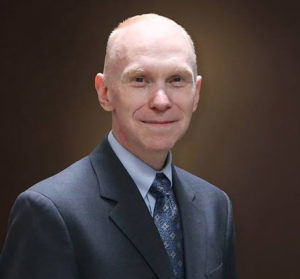
Dr. Matthew E. Bunson is a Register senior editor and a senior contributor to EWTN News. For the past 20 years, he has been active in the area of Catholic social communications and education, including writing, editing, and teaching on a variety of topics related to Church history, the papacy, the saints and Catholic culture. He is faculty chair at Catholic Distance University, a senior fellow of the St. Paul Center for Biblical Theology, and the author or co-author of over 50 books including The Encyclopedia of Catholic History, The Pope Encyclopedia, We Have a Pope! Benedict XVI, The Saints Encyclopedia and best-selling biographies of St. Damien of Molokai and St. Kateri Tekakwitha.
The Purgative and Illuminative Way – The Way of Mystery with Deacon James Keating
Deacon James Keating explains that moral life without a spiritual foundation quickly collapses into mere willpower and rule-keeping. True virtue begins when Christ’s own life and breath animate the soul so that goodness becomes joyful rather than forced. Drawing on the story of the rich young man, it contrasts external obedience with the interior transformation that comes from detachment and union with Christ. It outlines the classic stages of spiritual growth—purgation, illumination, and union—showing how conversion involves cooperating with grace to turn from sin, endure the pain of detachment, and gradually discover the delight of living virtuously.
In the illuminative stage, the moral teachings of the Church are seen not as burdens but as divine gifts that reveal humanity’s true fulfillment. We should not separate Jesus from the Church’s authority, as it’s a deception that isolates Christians and leaves them prey to self-deception and cultural ideologies. Moral relativism is a modern illusion that truth cannot be known, but the Catholic vision holds both mind and heart capable of grasping objective truth through Christ.
Discerning Hearts Reflection Questions
How do I personally experience the presence of Christ during the Mass and in receiving the Eucharist?
In what ways can I slow down and truly “savor” the mystery of the Eucharist as the saints did?
How might I deepen my faith in the real presence of Jesus through prayer and meditation on Scripture?
Do I recognize that at every Mass, I am united not only with Christ but also with all of heaven and my loved ones who have gone before me?
How can the example and writings of the saints inspire me to approach the Eucharist with greater love and reverence?
What steps can I take to participate in Mass more frequently or spend more time in Eucharistic adoration?
How does understanding the Eucharist as a “sacrament of love” call me to greater self-giving in my daily relationships?
What does it mean for me to rest on the heart of Christ as St. John did at the Last Supper?
How do the teachings of the Church Fathers strengthen my understanding and devotion to the Eucharist?
In what ways is the Mass a foretaste of heaven that prepares my soul for eternal communion with God?
Deacon James Keating, Ph.D., is a professor of Spiritual Theology and serves as a spiritual director at Kenrick Glennon Seminary in St. Louis, MO.

 From the General Audience on St. Albert the Great